

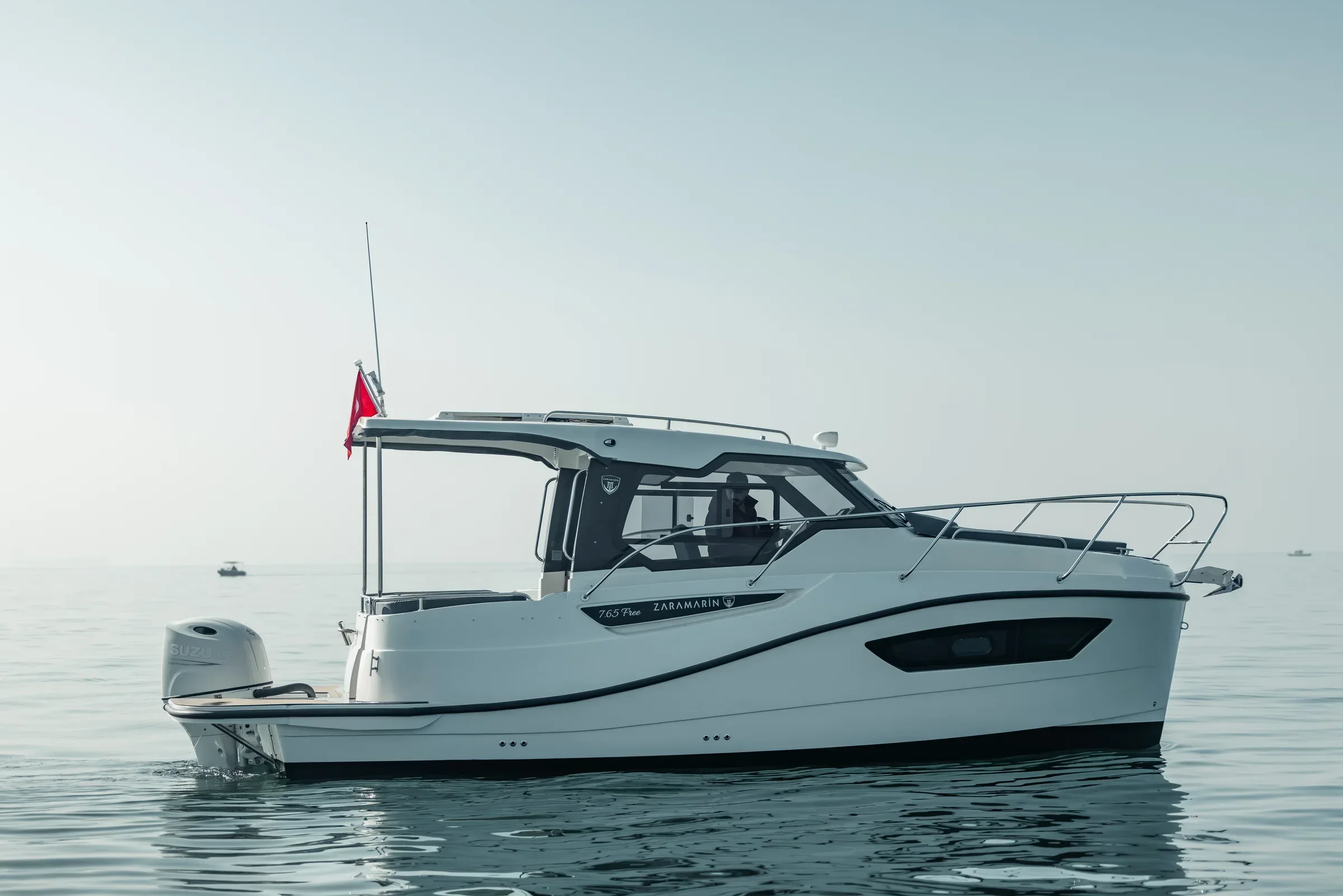
Fiberglass boats—often described as GRP hulls—are among the most common approaches in modern recreational boatbuilding. From day boats to family cruisers, the material supports a wide range of forms when design and production discipline are strong. Here is a clear look at what that means for owners.
What “fiberglass boat” means in practice
In everyday language, a fiberglass boat usually means a glass-reinforced plastic hull built in molds with layered laminates and resin systems. Owners care less about chemistry jargon and more about whether the hull form, deck layout, and finish suit the intended use—and whether maintenance stays realistic.
Fiberglass allows useful design freedom: cockpit ergonomics, deck geometry, and interior volume can be shaped to the brief. Zaramarin models across sizes follow that composite approach for different missions.
Design flexibility
The same material family can support open day boats, cabin layouts, and larger motor-yacht living spaces. That flexibility is why comparing models by use case matters more than debating the material in isolation.
For compact open use, see Swift 4.60 Open; for sheltered compact use, Swift 4.60 Cabin. Family-oriented volume appears in 7.65 Free and 7.65 Free Series 2; more living space in Free 1100.
Ownership and care
With regular cleaning, seasonal checks, and sensible winterization or berthing, fiberglass boats can serve for many seasons. Focus on a realistic care calendar rather than exaggerated promises. Ask about recommended care during purchase conversations.
Owners often underestimate how much a calm maintenance rhythm matters. A simple seasonal checklist—wash-down after salty days, inspect fittings, and review canvas or cover condition—keeps the boat ready without turning ownership into a second job. When you talk with the sales team, ask how systems are arranged for access; serviceability is part of the real advantage of a well-built fiberglass boat.
Where fiberglass boats shine
Day trips, social outings, family cruising, and longer stays are all possible—provided size and layout match. The useful question is not “is fiberglass good?” but “which fiberglass layout fits this crew and this water?”
What to inspect before buying
Material alone is never enough. Review hull and deck detailing, hardware quality, systems layout, and how production choices support safety and daily use. On-site inspection still teaches more than photos.
Clarify passenger count, open versus cabin preference, and outing length first—then use technical pages to compare. Our open vs cabin and motor yacht buying guides help frame that decision.
Closing the loop
Fiberglass is a proven foundation for recreational boats when engineering and finish are taken seriously. Explore all models, read more on the blog, or contact Zaramarin when you want a tailored recommendation. For range positioning, see Free 1100 and Swift compared.