

Choosing a motor yacht is both a lifestyle decision and a long-term ownership plan. The right model feels natural on the water when it matches how you actually cruise—not a brochure fantasy. The wrong one can mean unused cabin space, awkward deck flow, or a boat that is simply harder to live with than you expected. This guide keeps the process practical.
Clarify how you will use the boat
Start with scenarios, not length overall. Weekend day trips, family afternoons, hosting friends, or longer stays each ask for a different balance of cockpit space, storage, and shelter. An open layout and a cabin layout rarely serve the same weekly routine.
Write down passenger count, typical outing length, preferred waters, and whether you berth or trailer. That short brief makes every later comparison clearer. If you are still weighing layouts, read our overview of open versus cabin boats.
Size, capacity, and living space
Length is only a starting number. Deck circulation, seating groups, lockers, and how the boat feels underway matter more than a bigger LOA on paper. A larger yacht is not automatically the better daily boat.
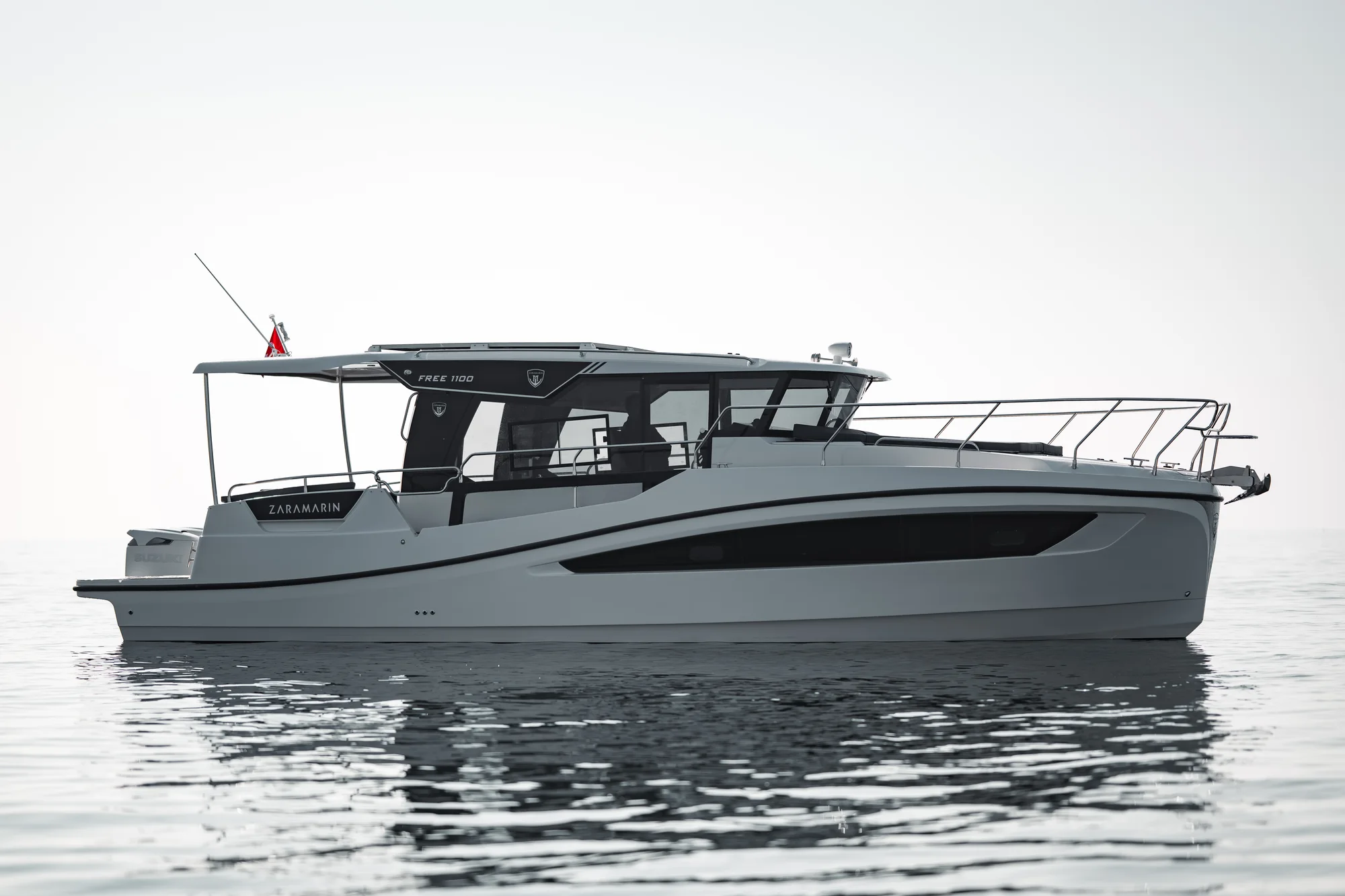
If you host family and guests, salon and shared areas become decisive. If you want a responsive day boat, a well-balanced mid-size model may be enough. In the Zaramarin range, 7.65 Free suits versatile mid-to-upper day and weekending use, while Free 1100 suits owners who want more living volume. For a compact sheltered option, consider Swift 4.60 Cabin.
Power and cruising style
Engine choice shapes the boat’s character. The goal is not the highest power on a list; it is a range that fits displacement, waters, and how you cruise. Overspecifying power raises ownership complexity; underspecifying it reduces comfort in the conditions you actually meet.
Discuss options with the sales team against your real outings. Prefer model technical information and professional guidance over assumed consumption figures.
Standard equipment versus options
Read the equipment list in two layers: what is standard for safe daily use, and what is optional for navigation, comfort, or personal preference. Separate must-haves from nice-to-haves so budget goes where it changes the experience.
Model pages help you see those groups clearly before you commit.
Build quality and materials
A fiberglass hull, engineered and finished with care, can be durable and manageable to maintain. Look beyond styling: deck hardware fit, hatch and hinge quality, wiring and systems layout all affect long-term satisfaction. Our note on fiberglass boat advantages expands this point.
Where possible, inspect the boat in person and ask how production choices support your use case.
Ownership: berthing, care, and seasonality
Purchase day is only the start. Seasonal checks, cleaning, winterization or berthing arrangements, and service access are part of ownership. Larger boats usually mean more operational responsibility—plan that before you decide.
A simple pre-decision checklist
If you can, arrange a thorough inspection or sea trial. Cockpit ergonomics, sightlines, seating, and storage feel different in person than in photos. Ask: Is the purpose clear? Is capacity realistic? Does open or cabin fit the climate and routine? Are equipment priorities set? Is berthing and care planned?
Moving forward with Zaramarin
A good motor yacht choice is the meeting of right size, balanced equipment, and a trustworthy build approach. Compare 7.65 Free, Free 1100, and Swift 4.60 Cabin, browse all models, or contact us to talk through your brief. For a model-level view, see our Free 1100 and Swift comparison. More reading stays on the blog.